The security landscape in 2025 has delivered a harsh verdict: deepfake detection technology is collapsing under real-world pressure while enhanced KYC protocols emerge as the definitive defense against synthetic media attacks. The data reveals a clear winner in this technological arms race, and it's time compliance teams abandon failing detection strategies for verification-based approaches that actually work.
The Deepfake Detection Catastrophe
Traditional deepfake detection has become a liability rather than an asset. Human detection accuracy for high-quality video deepfakes sits at a dismal 24.5%, while AI detection tools experience 45-50% accuracy drops when deployed against real-world attacks compared to controlled laboratory conditions.
The root cause? Deepfake generation consistently outpaces detection capabilities, creating an asymmetric technological arms race that heavily favors attackers. Research by CSIRO demonstrates that leading detection tools collapse to below 50% accuracy when confronted with deepfakes produced by techniques they weren't trained on: making detection models rapidly obsolete as new generation methods emerge.
Financial institutions discovered this reality the hard way. Deepfake-enabled fraud cases surged 1,740% in North America between 2022 and 2023, with financial losses exceeding $200 million in Q1 2025 alone. Organizations relying primarily on detection technology found themselves defenseless against synthetic media attacks that bypassed their security measures with alarming consistency.

Even training employees to identify deepfakes backfires spectacularly. While feedback-based training improves detection accuracy by approximately 20%, it simultaneously increases emotional arousal, decreases emotional valence, and elevates anxiety toward AI misuse: leaving compliance teams more stressed and less confident in their security protocols.
Why KYC and Verification Protocols Dominate
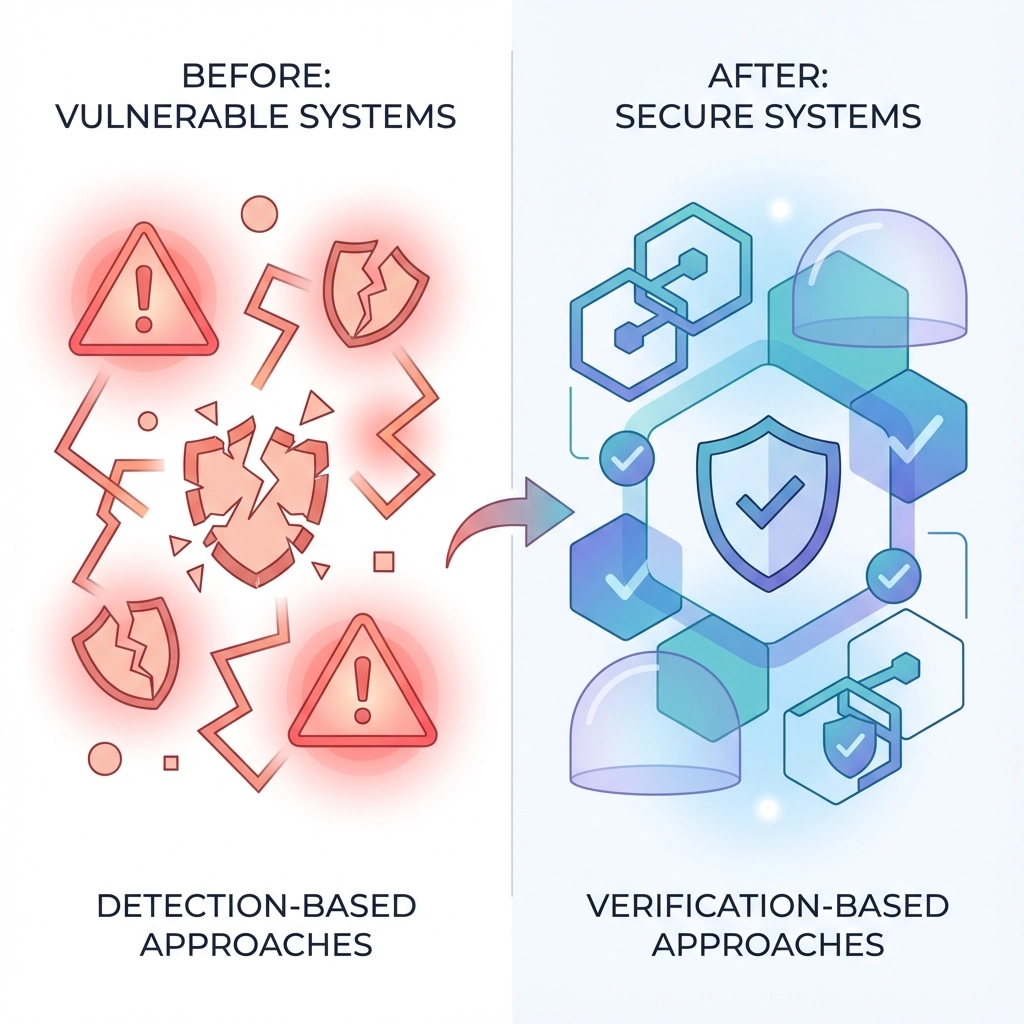
The most effective 2025 security strategies abandon the "detect and block" mentality for a "verify and confirm" approach that operates independently of deepfake detection capabilities. This fundamental shift eliminates the arms race entirely by making synthetic media authenticity irrelevant to security outcomes.
Multi-Channel Verification: The Gold Standard
Enhanced KYC frameworks implement mandatory secondary verification through pre-established communication channels. Instead of trusting initial contact authenticity, compliance teams verify identity through independent channels using pre-verified phone numbers, email addresses, and authentication protocols.
This approach achieves near-perfect security because deepfake quality becomes irrelevant when verification occurs through separate, authenticated channels. Financial institutions implementing comprehensive multi-channel verification report prevention rates approaching 99% against synthetic media attacks.
Behavioral Biometrics: Beyond Traditional Identity Verification
More than 100 financial institutions have deployed behavioral biometric systems that analyze typing patterns, navigation habits, and user behavior in real-time. These systems create inter-bank behavioral fraud detection networks that identify anomalies in user patterns rather than focusing on media authenticity.
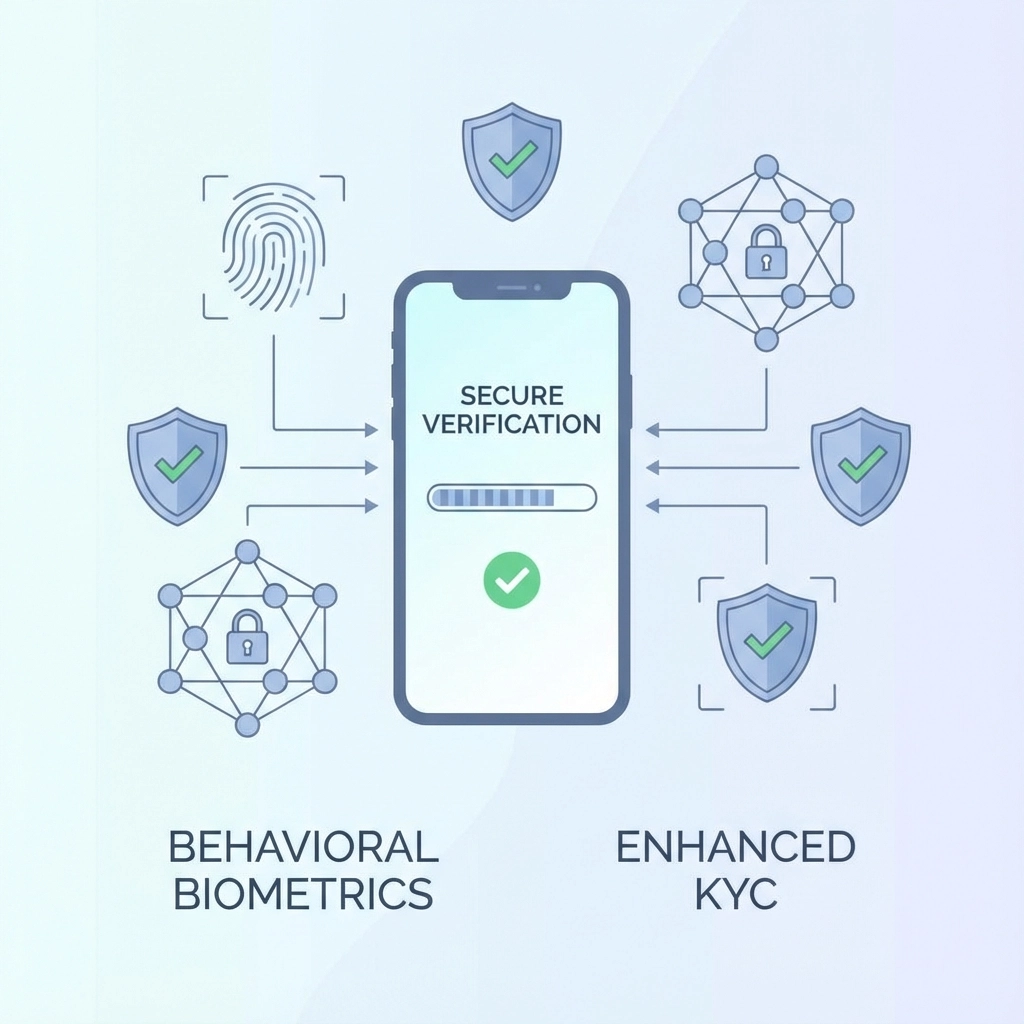
Behavioral biometrics extend KYC beyond traditional document verification by establishing user baselines that remain consistent regardless of deepfake sophistication. Deviations from established patterns trigger enhanced verification protocols that synthetic media cannot circumvent.
Enhanced Authentication Protocols
Leading compliance frameworks now mandate time delays for high-value transactions, cryptographic device authentication, and multi-factor authentication requiring both facial verification and original device presence. These protocols add friction specifically designed to prevent real-time social engineering attacks that deepfakes enable.
The US Financial Crimes Enforcement Network has issued formal guidance mandating enhanced verification procedures for deepfake incidents, establishing industry-wide standards that prioritize verification over detection.
Advanced Detection Technology: Limited Effectiveness
Multimodal detection systems represent the technological ceiling for detection-based approaches, achieving 94-96% accuracy rates under optimal laboratory conditions. These systems analyze voice, video, and behavioral patterns simultaneously using ensemble methods that combine multiple detection algorithms.
However, these advanced systems remain constrained by fundamental limitations. They only function optimally under controlled conditions and still participate in the detection-generation arms race. Real-world deployment consistently reduces their effectiveness below advertised laboratory benchmarks.

The reality for compliance teams: even the most sophisticated detection technology provides unreliable protection against evolving synthetic media techniques. Organizations investing heavily in detection capabilities find themselves constantly updating systems to counter new generation methods: an unsustainable approach that drains resources without delivering consistent security outcomes.
Quantifying Security Effectiveness: The Data Speaks
The performance gap between detection and verification approaches becomes stark when examining real-world deployment data:
Detection-Based Security:
- Human identification: 24.5-55% accuracy
- AI detection tools: 45-50% real-world accuracy (down from 94-96% lab conditions)
- Multimodal systems: High lab performance, significant real-world degradation
- Vulnerability to new attacks: Extreme
- Implementation complexity: Medium to high
Verification-Based Security:
- Multi-channel verification: 99%+ prevention rates
- Behavioral biometrics: High effectiveness with low false positives
- Cryptographic authentication: Near-perfect security when properly implemented
- Vulnerability to new attacks: Minimal
- Implementation complexity: High initial setup, streamlined operations
Implementation Roadmap for Compliance Teams
Compliance managers transitioning from detection to verification strategies should implement these protocols systematically:
Phase 1: Establish Verification Infrastructure
Deploy multi-channel verification requiring callback procedures through pre-verified contact methods for all sensitive transactions. This creates immediate protection against synthetic media attacks regardless of deepfake quality.
Implement safe words and decision trees for high-risk scenarios that provide organizational protocols deepfakes cannot bypass. These human-centric verification methods remain effective even as synthetic media technology evolves.
Phase 2: Deploy Behavioral Analytics
Integrate behavioral biometric systems that establish user baselines and flag deviations indicating potential account compromise. These systems provide continuous monitoring that detects attack patterns rather than synthetic media itself.
Configure inter-system behavioral fraud detection networks that share threat intelligence across platforms, creating comprehensive protection that scales beyond individual organizational boundaries.
Phase 3: Enhance Authentication Protocols
Mandate cryptographic device authentication combining possession factors with behavioral verification. This multi-factor approach ensures that successful attacks require compromising multiple independent security layers simultaneously.
Implement mandatory time delays for high-value transactions that prevent real-time social engineering attacks, giving compliance teams opportunity to verify suspicious requests through independent channels.
The 2025 Compliance Reality
Deloitte projects $40 billion in AI-enabled fraud by 2027, but the pathway to prevention doesn't involve building better detection tools: it requires verification systems that operate independently of synthetic media capabilities.
The American Bankers Association's emerging best practices emphasize training employees to verify identity through independent channels regardless of communication authenticity, rather than training them to identify deepfakes. This approach acknowledges the fundamental limitation of detection-based security while leveraging verification methods that remain effective against evolving threats.
Organizations that implemented comprehensive KYC frameworks combining verification protocols with behavioral biometrics demonstrate effective prevention rates that traditional detection methods cannot match. The data overwhelmingly supports process-based strategies over technology-based detection for long-term security effectiveness.
Transform Your Security Strategy
The evidence conclusively demonstrates that enhanced KYC and verification protocols provide superior protection against deepfake attacks compared to detection-based approaches. Compliance teams continuing to rely primarily on synthetic media detection expose their organizations to preventable security breaches and regulatory consequences.
Successful 2025 security strategies prioritize identity verification through independent channels, implement behavioral analytics that detect attack patterns, and deploy multi-factor authentication that synthetic media cannot compromise. These approaches deliver consistent protection that scales with evolving threat landscapes.
The choice for compliance professionals is clear: abandon failing detection strategies for verification frameworks that actually work. Enhanced KYC protocols combined with behavioral biometrics and cryptographic authentication provide the definitive defense against synthetic media attacks: making deepfake quality irrelevant to security outcomes.
Start implementing multi-channel verification protocols today. Your organization's security depends on verification strategies that work, not detection technology that fails when you need it most.